However you want.
Choose the machines, their operating systems and apps, the network between them and the services they reach. Start from a built-in world or define your own.
Create a world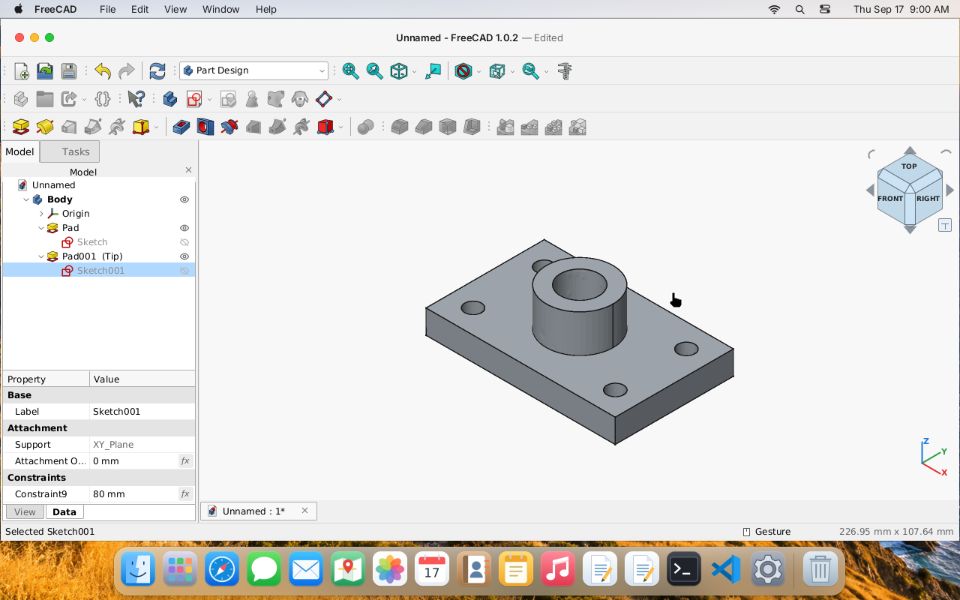
Every machine above is running in your browser.
Choose the machines, their operating systems and apps, the network between them and the services they reach. Start from a built-in world or define your own.
Create a world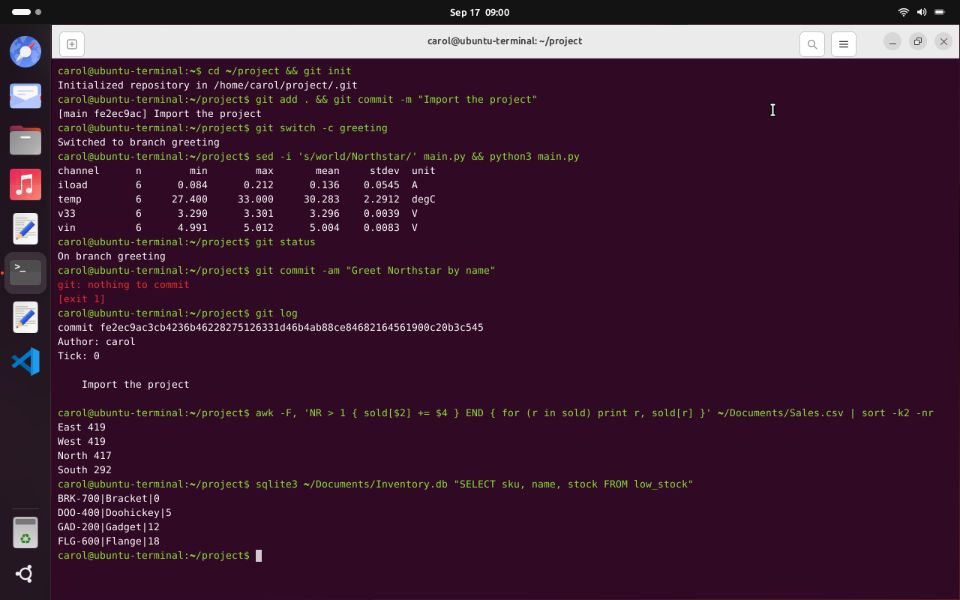
Ubuntu, a terminal
macOS, FreeCAD
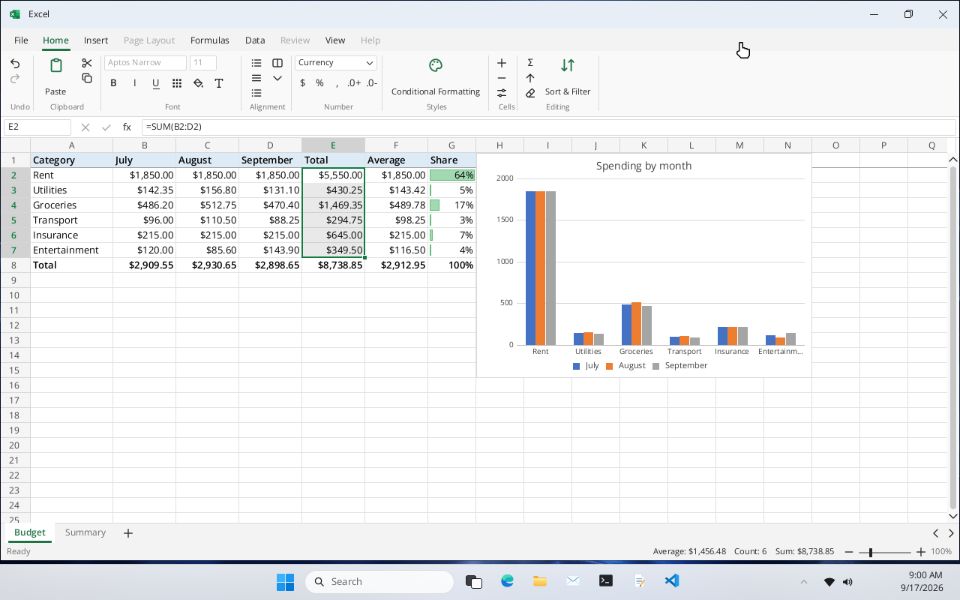
Windows, Excel
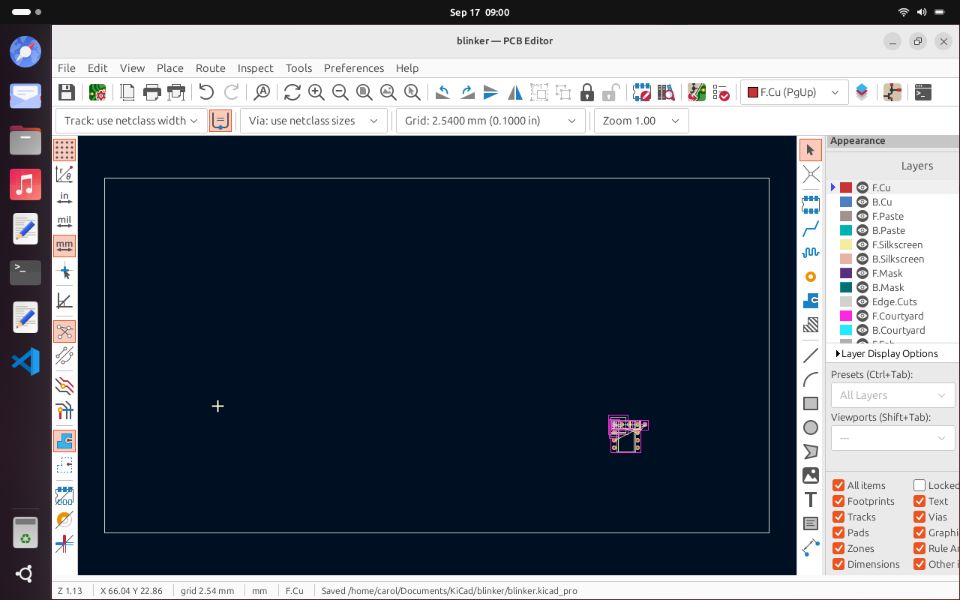
Ubuntu, KiCad
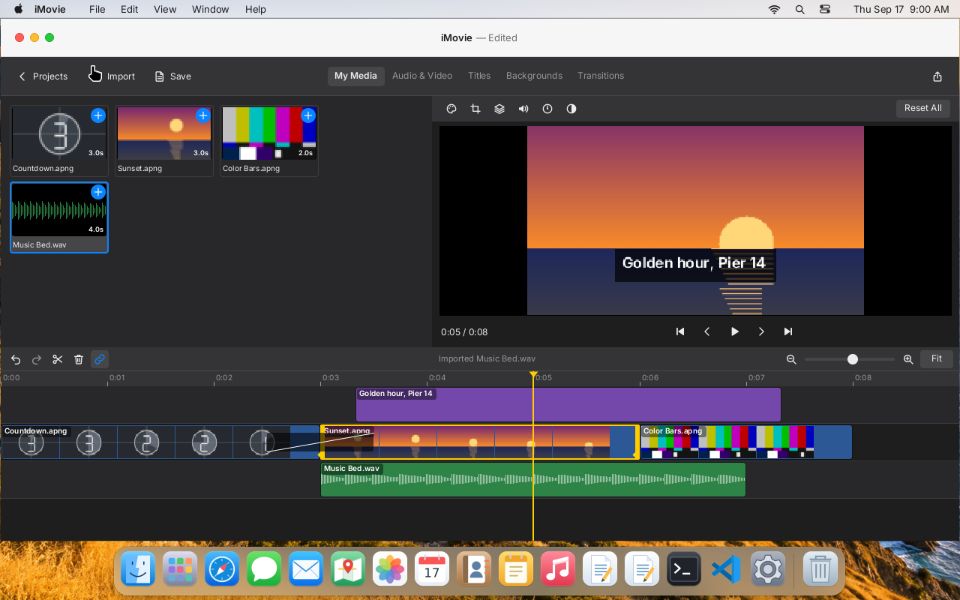
macOS, iMovie
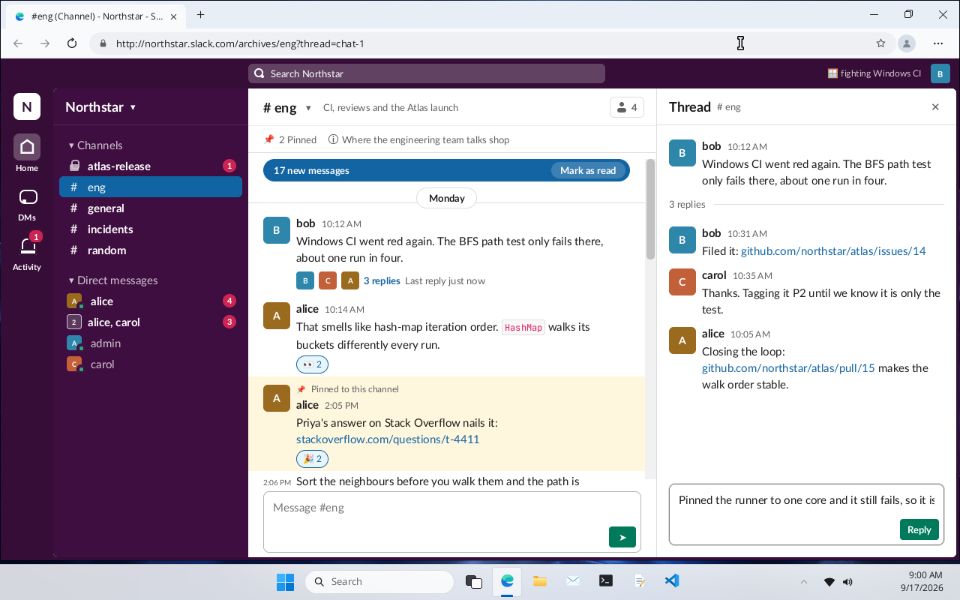
Windows, Slack in Edge
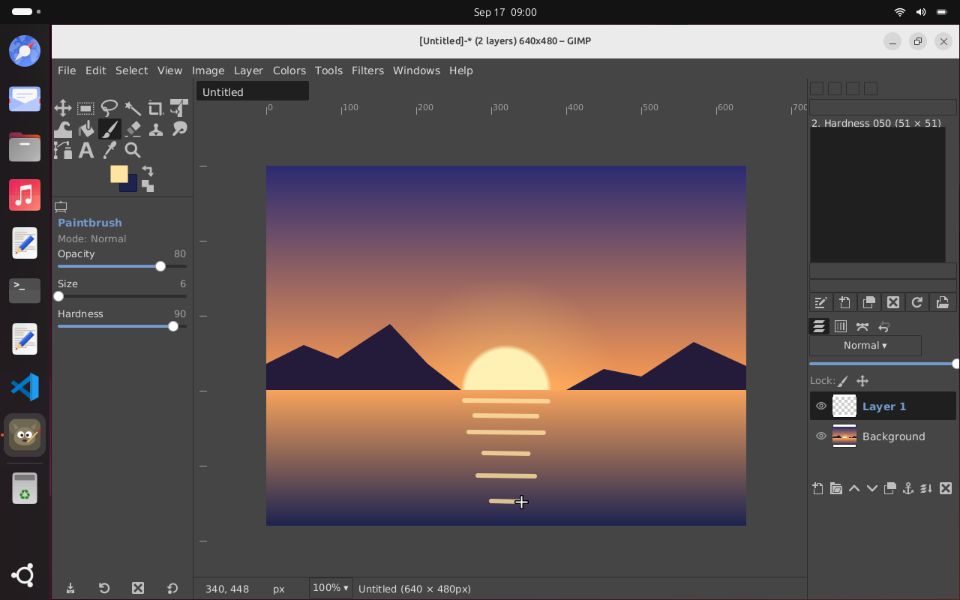
Ubuntu, GIMP
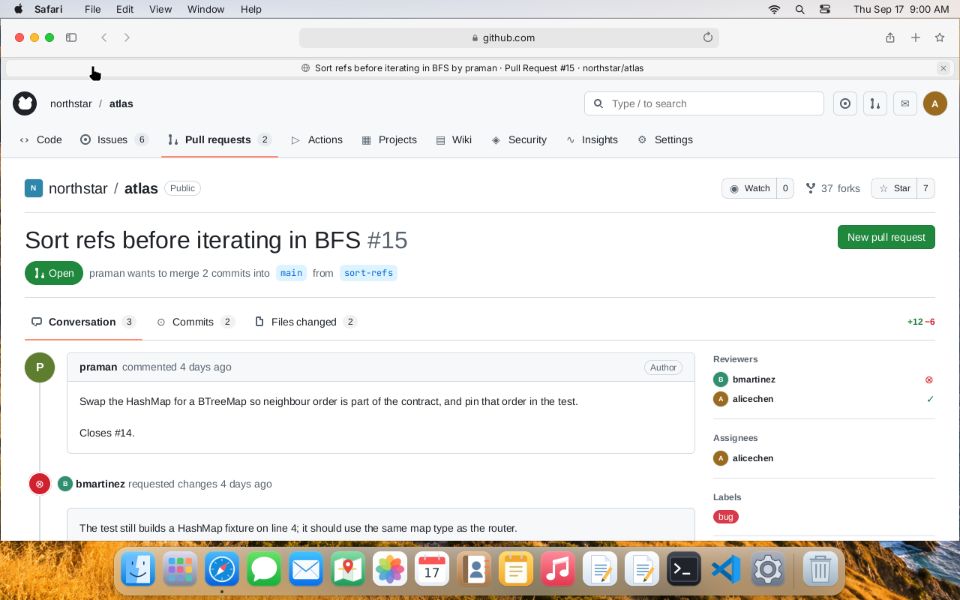
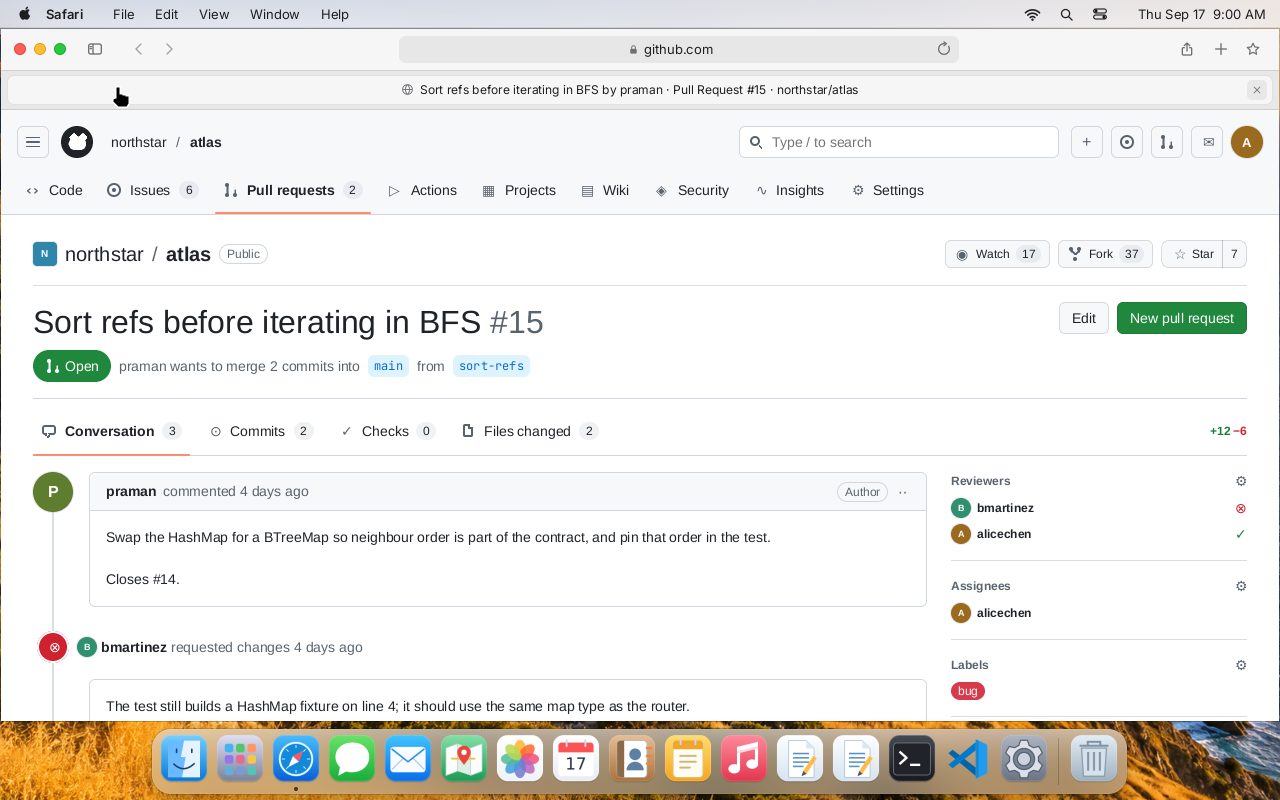
macOS, GitHub in Safari
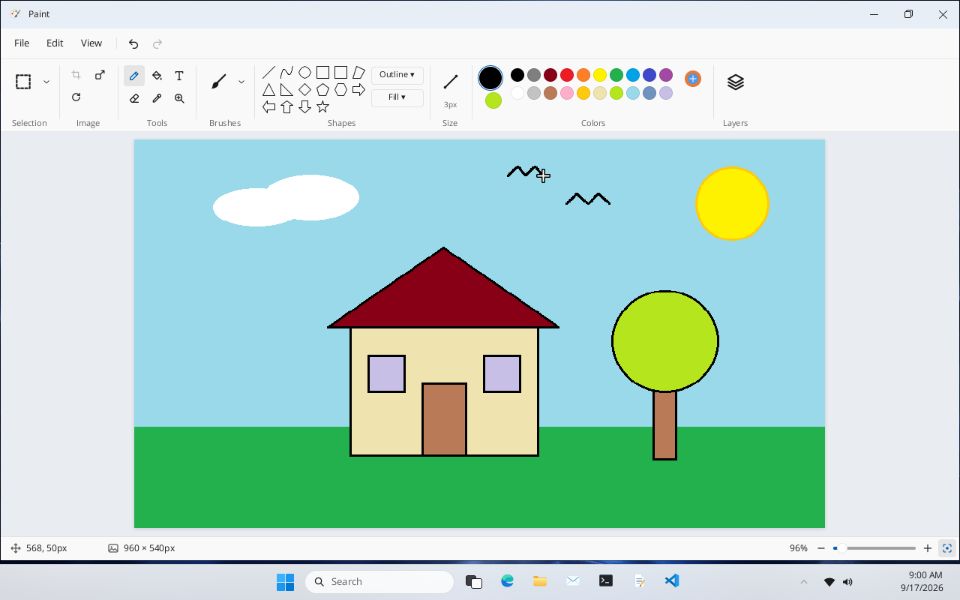
Windows, Paint
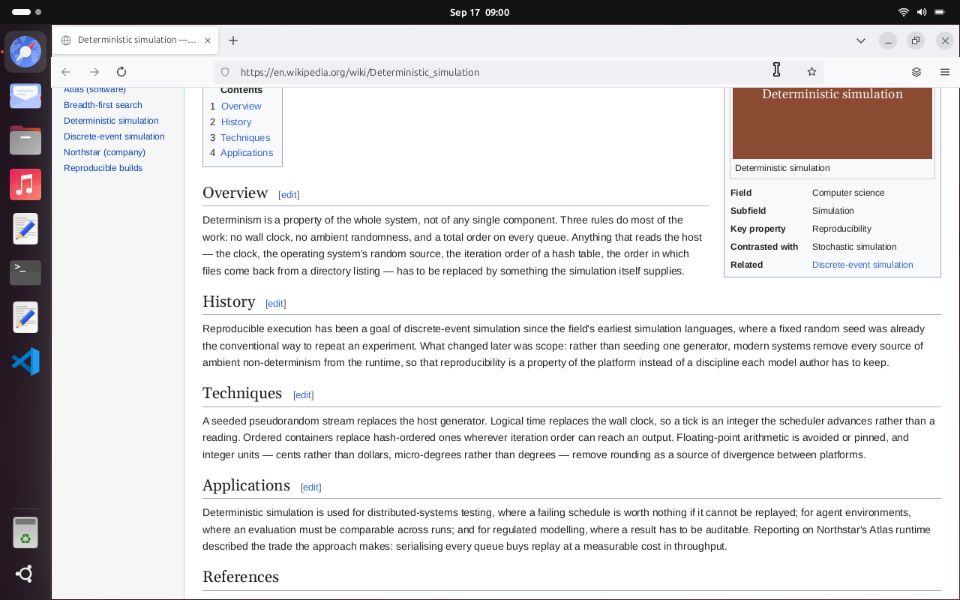
Ubuntu, Firefox
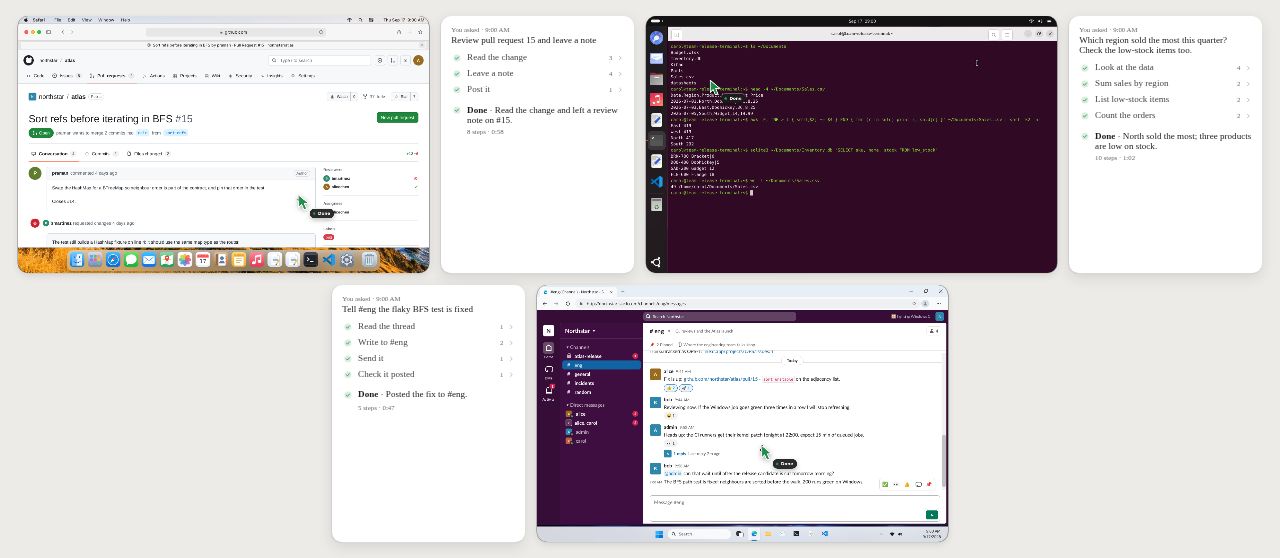
Release engineers, 3 desktops
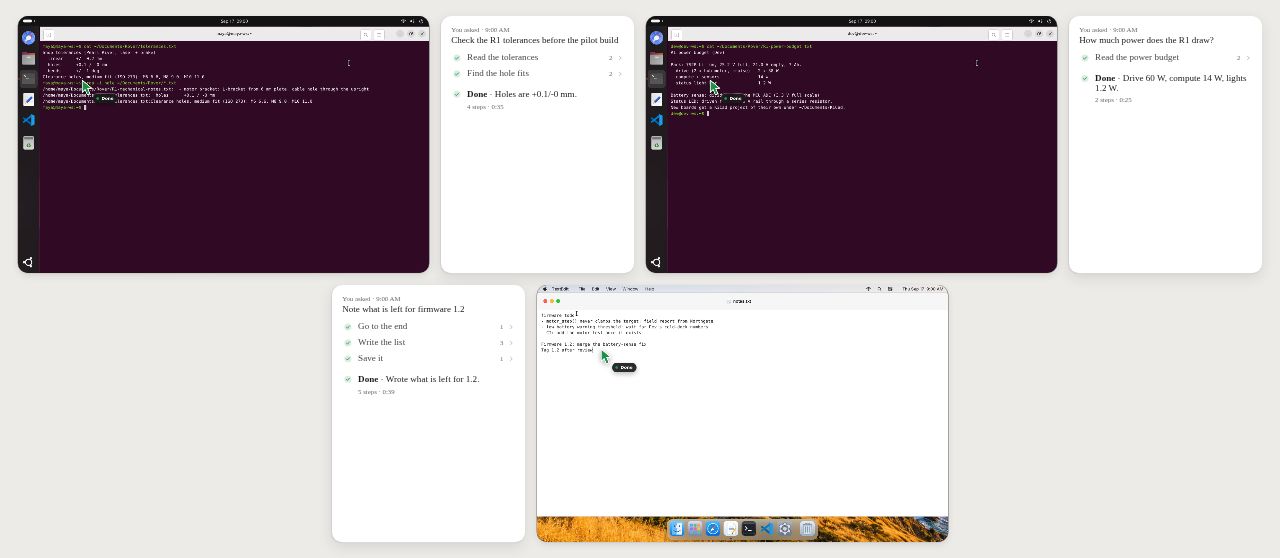
Hardware engineers, 3 desktops
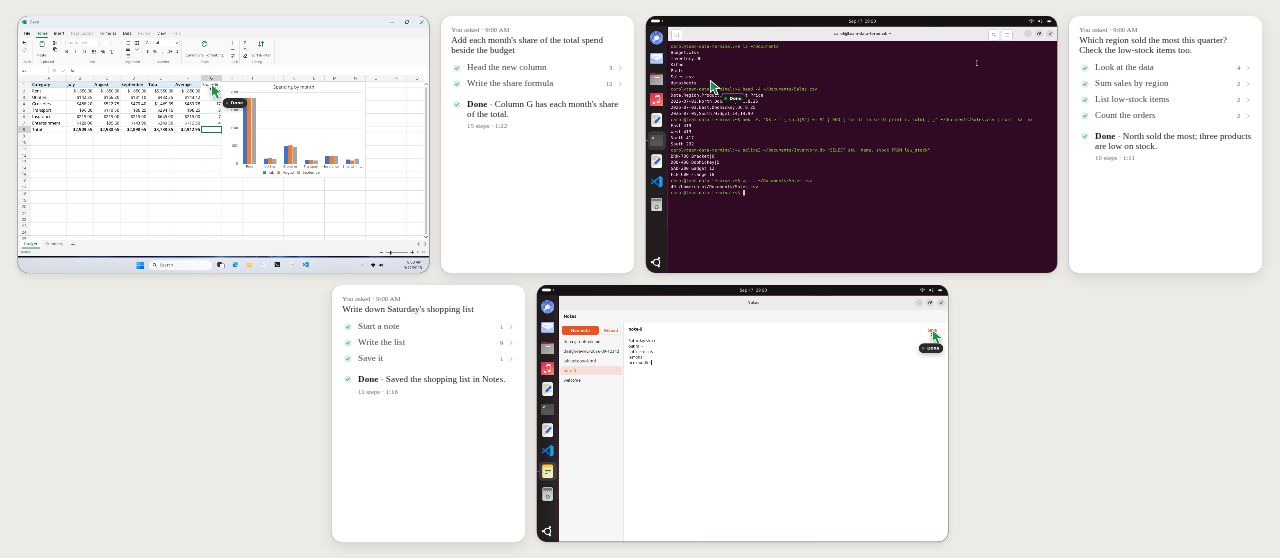
Data and finance, 3 desktops
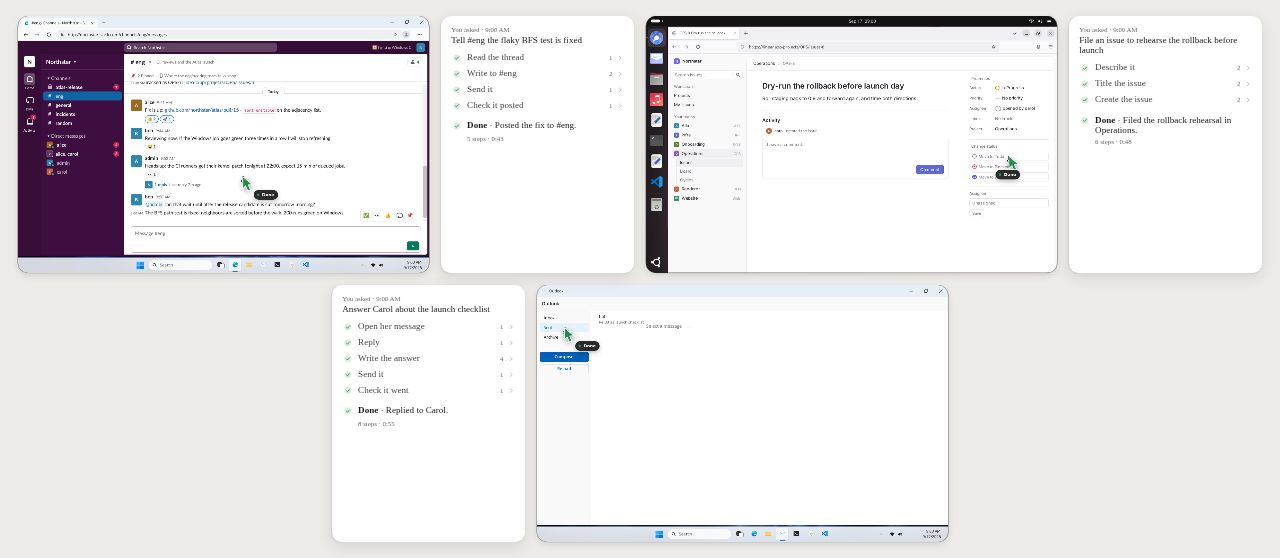
On call, 3 desktops
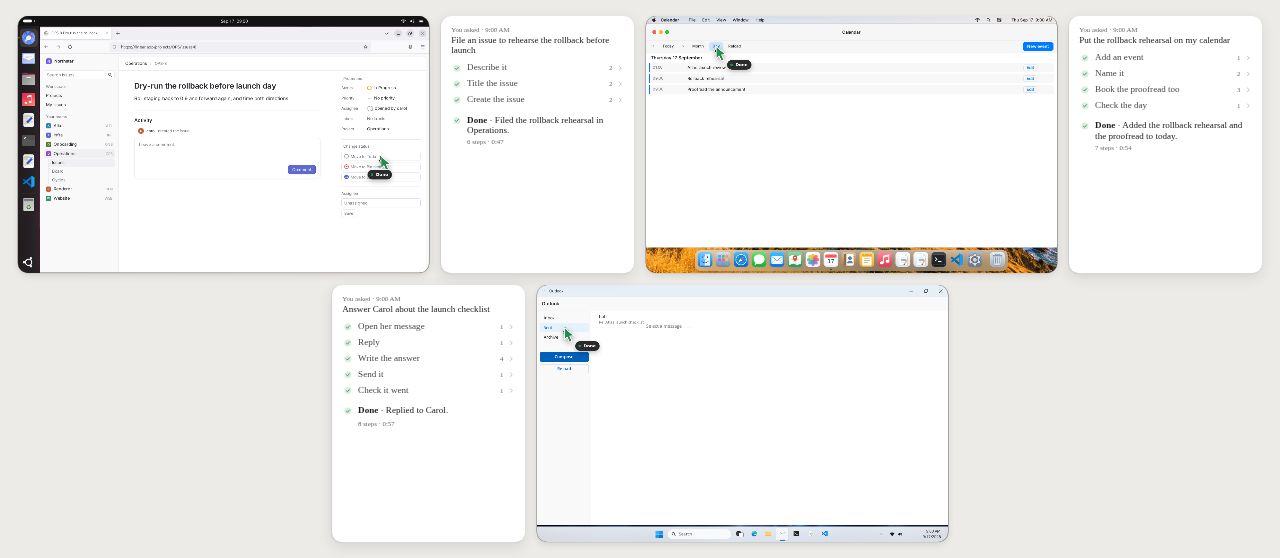
Planning the launch, 3 desktops
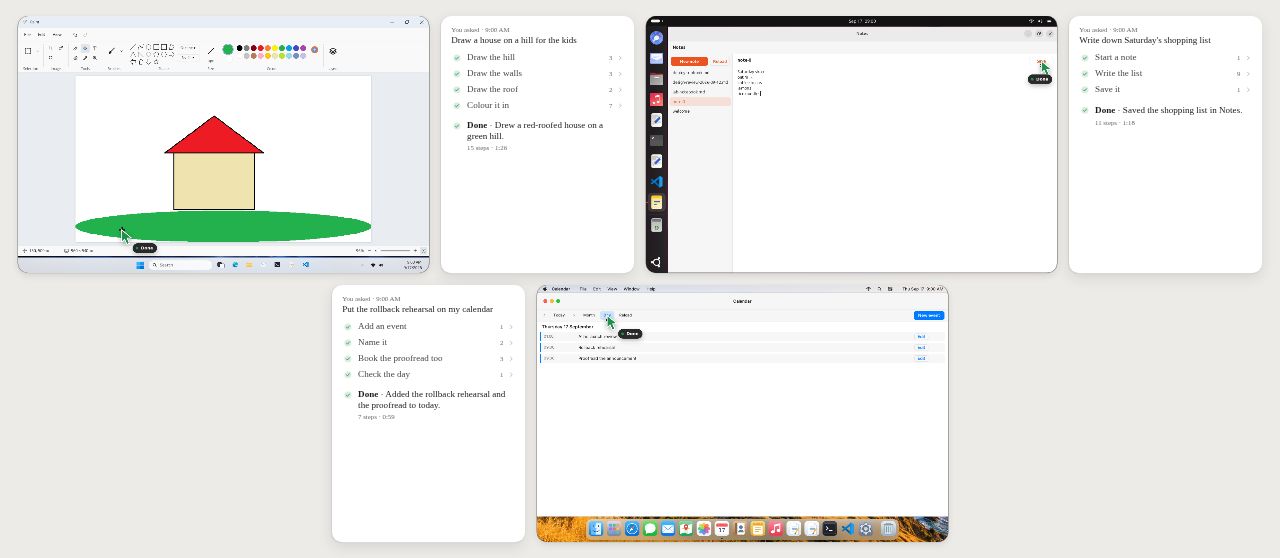
Design and docs, 3 desktops
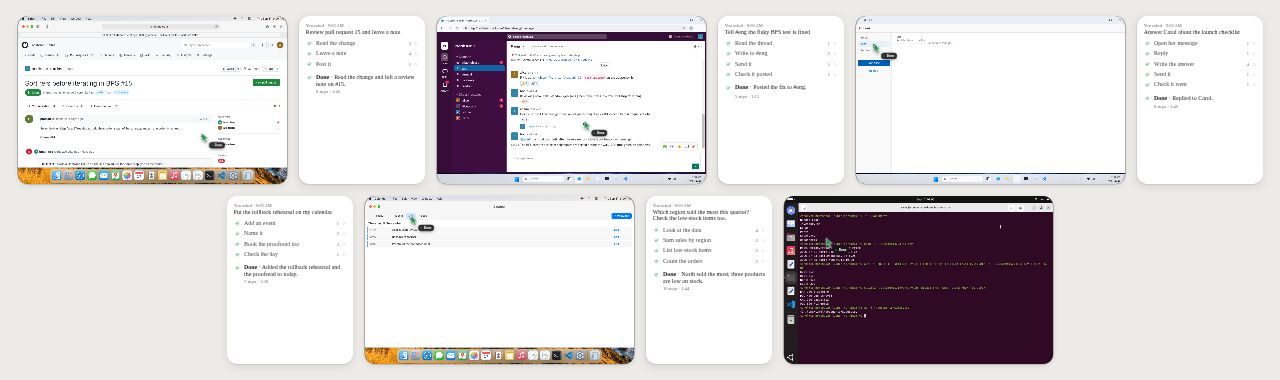
Northstar on launch day, 5 desktops
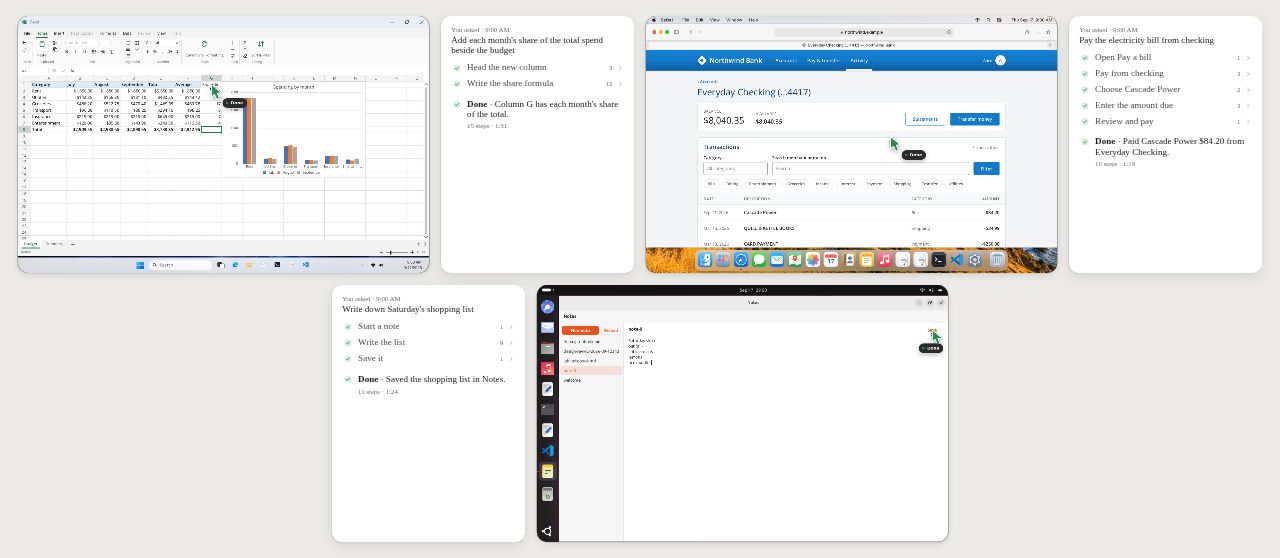
Northstar at month end, 3 desktops
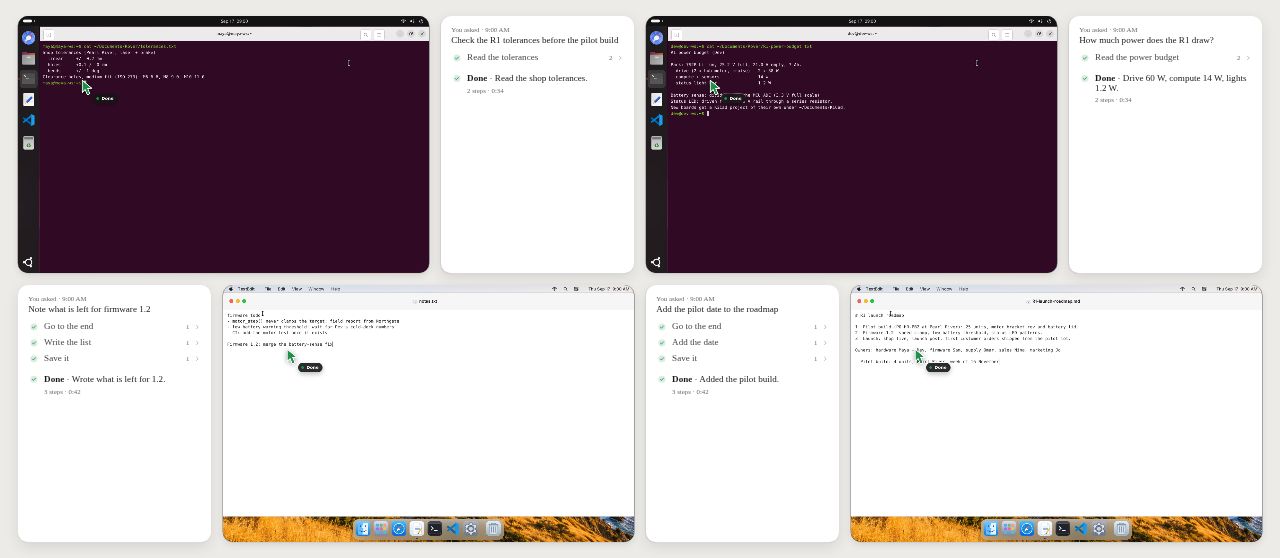
Halyard Robotics engineering, 4 desktops
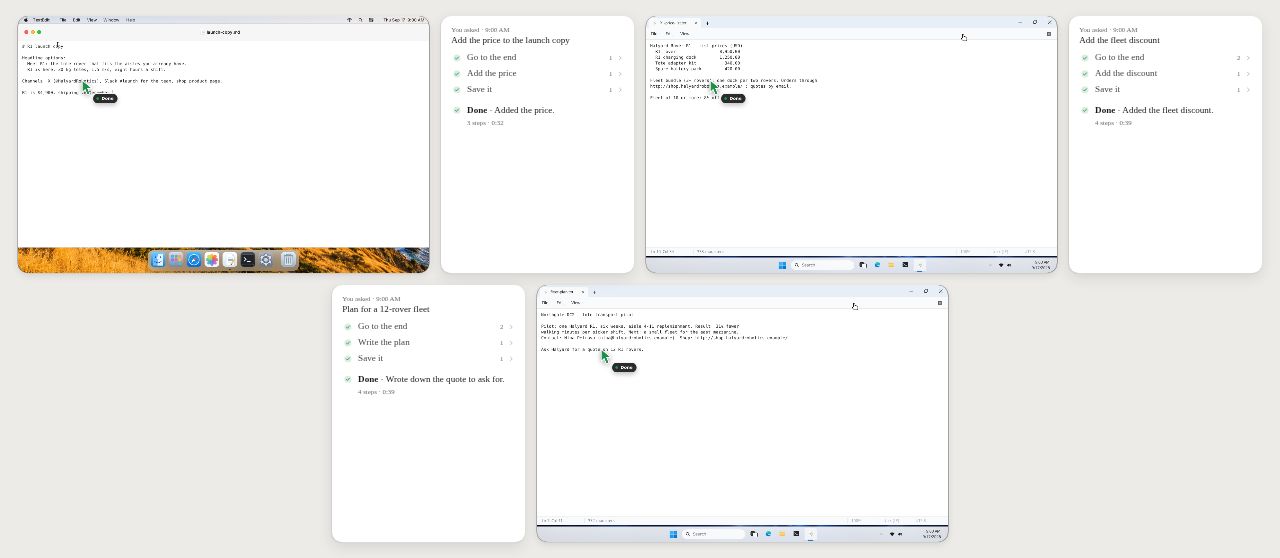
Halyard Robotics sales and launch, 3 desktops
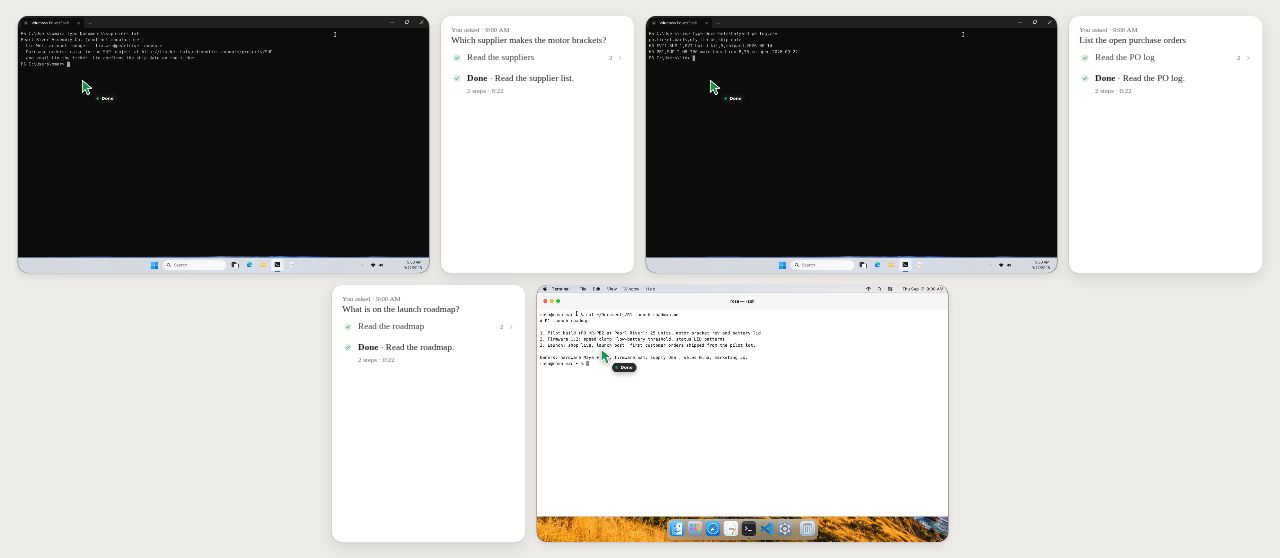
Halyard Robotics purchasing, 3 desktops
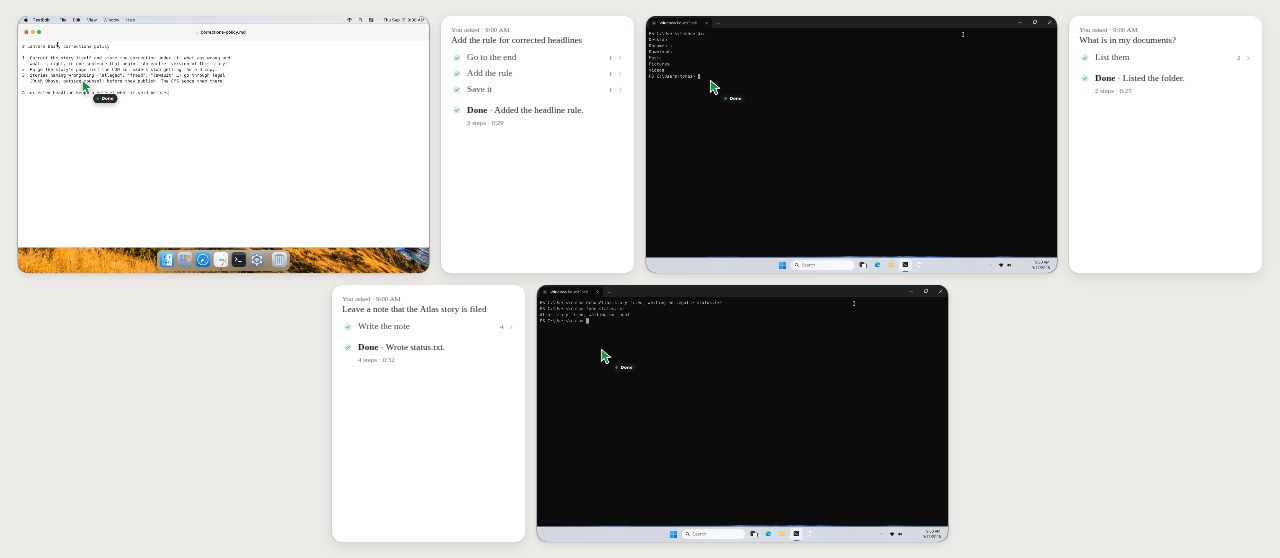
Lantern Media newsroom, 3 desktops
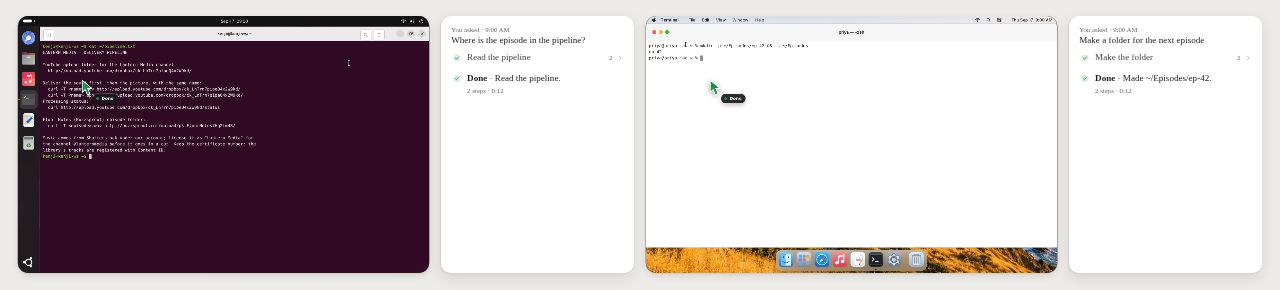
Lantern Media production, 2 desktops
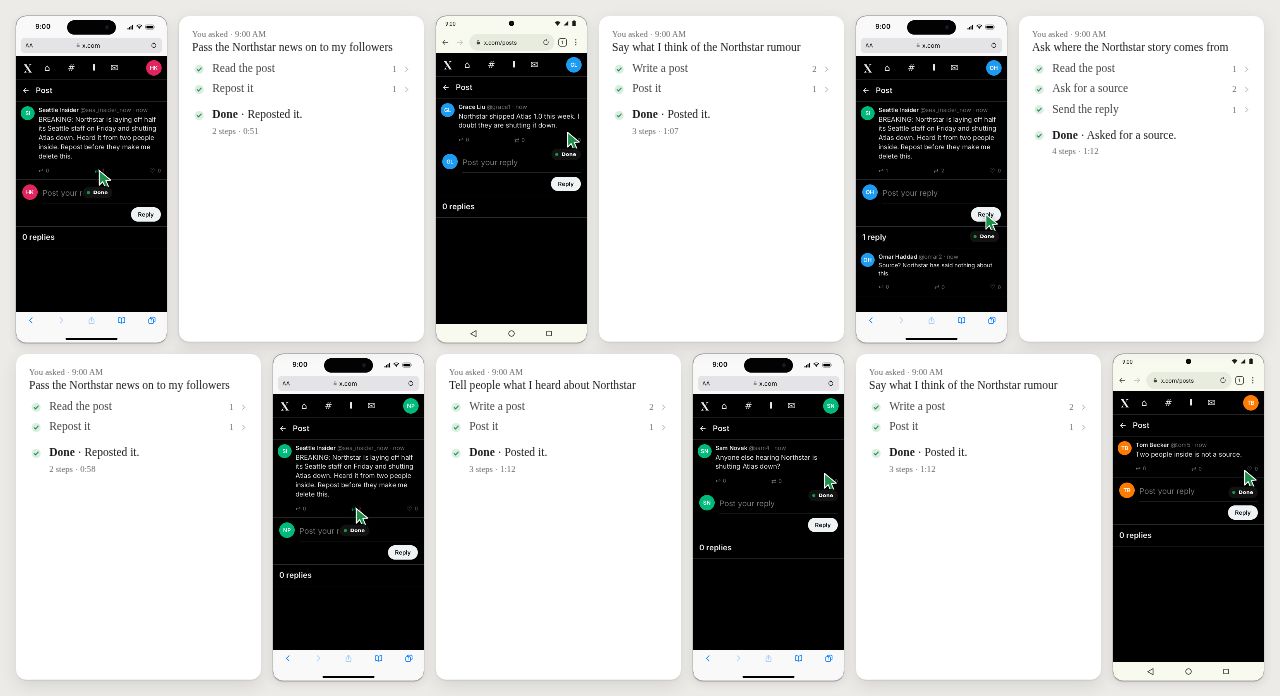
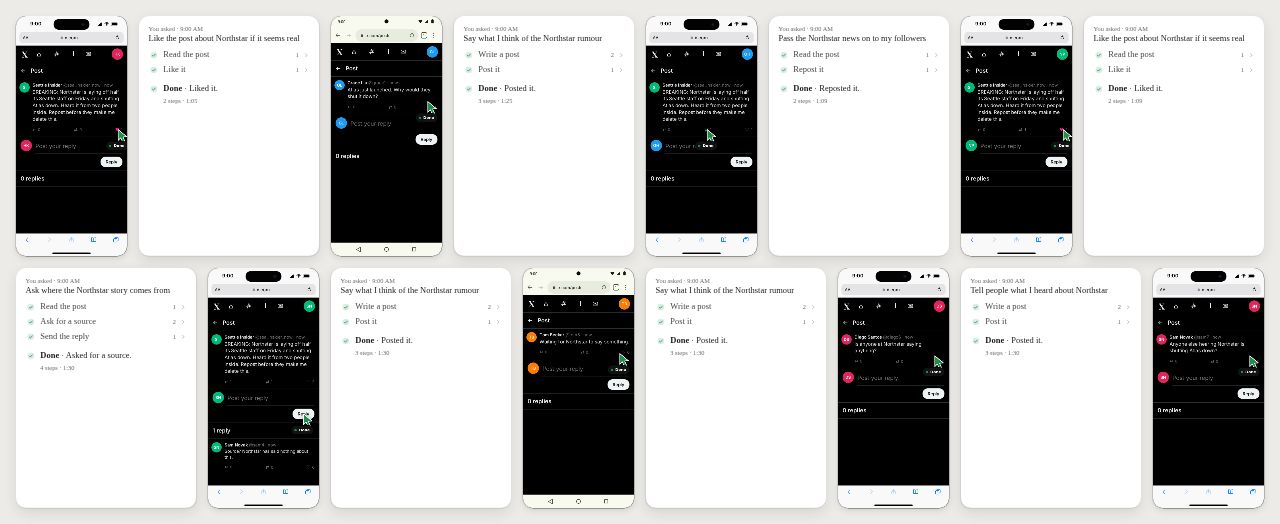
6 people, 6 phones, 1 rumor
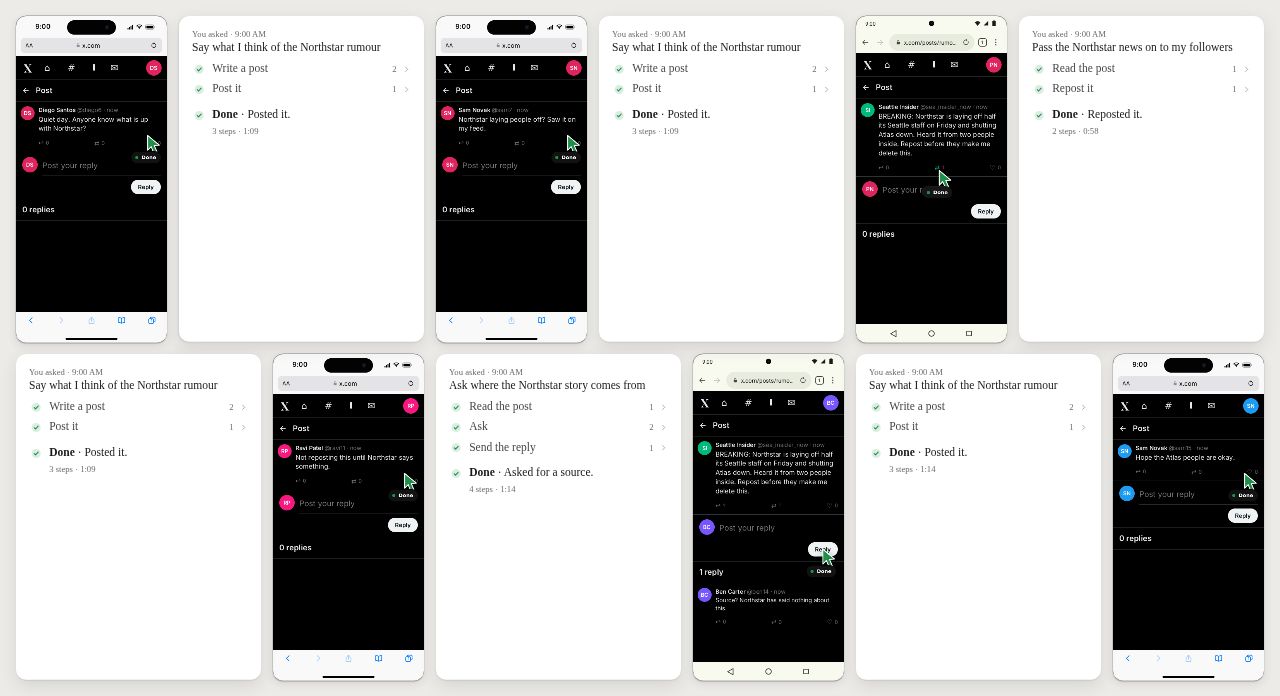
8 people, 8 phones, 1 rumor
6 more people, 6 phones, 1 rumor
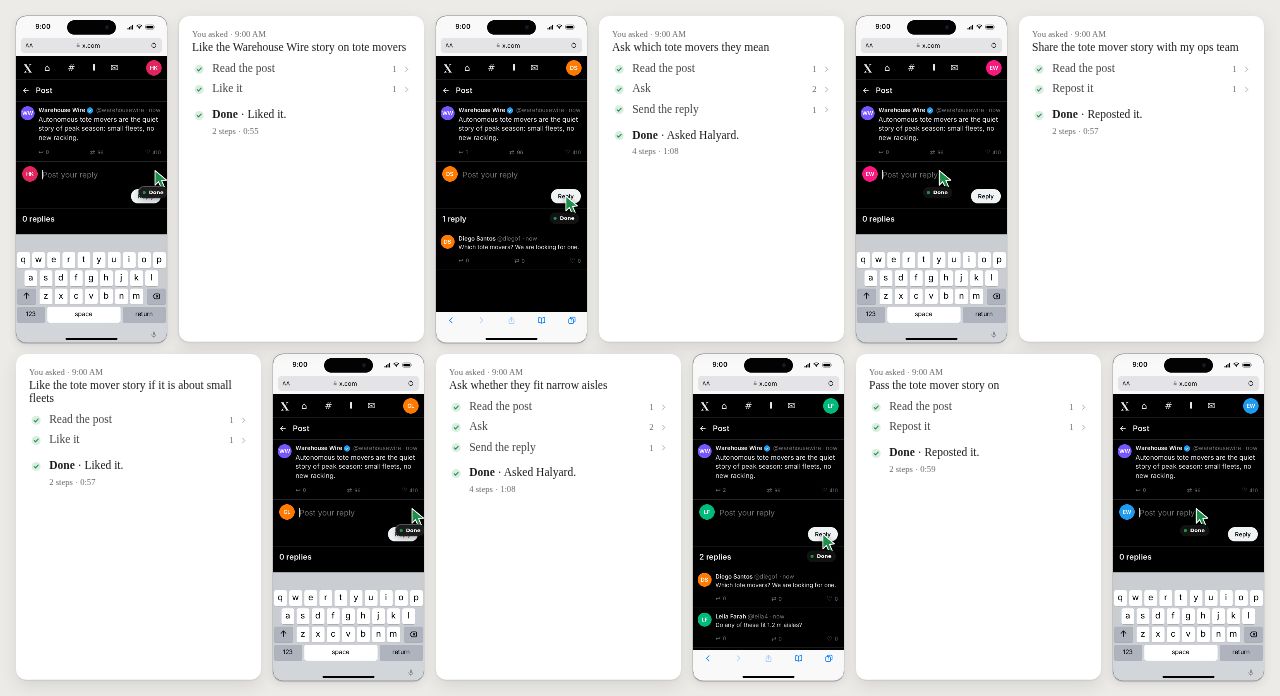
6 buyers, 6 phones, 1 story
Each person has a phone or a computer, sees only their own screen and acts on it. A script, a language model or your own agent decides what they do. One built-in society is a company and its buyers on launch day: 21 people.
Read about societies6 people, 6 phones, 1 rumor
Real work crosses people, machines and days. Each job here was done through the screen, with pointer and keyboard, and judged by checks on the world’s state.
See the expert workFork the world at a checkpoint and change a rule, a setting or an action. Every branch starts from the same state, and the same actions always reach the same state. A fork takes 35 µs.
The checker forks at every action an agent may take, to the depth you set, and returns the shortest sequence that breaks a policy. On the reference world it checked 77,748 states and broke 9 of 15 policies.
See the benchmark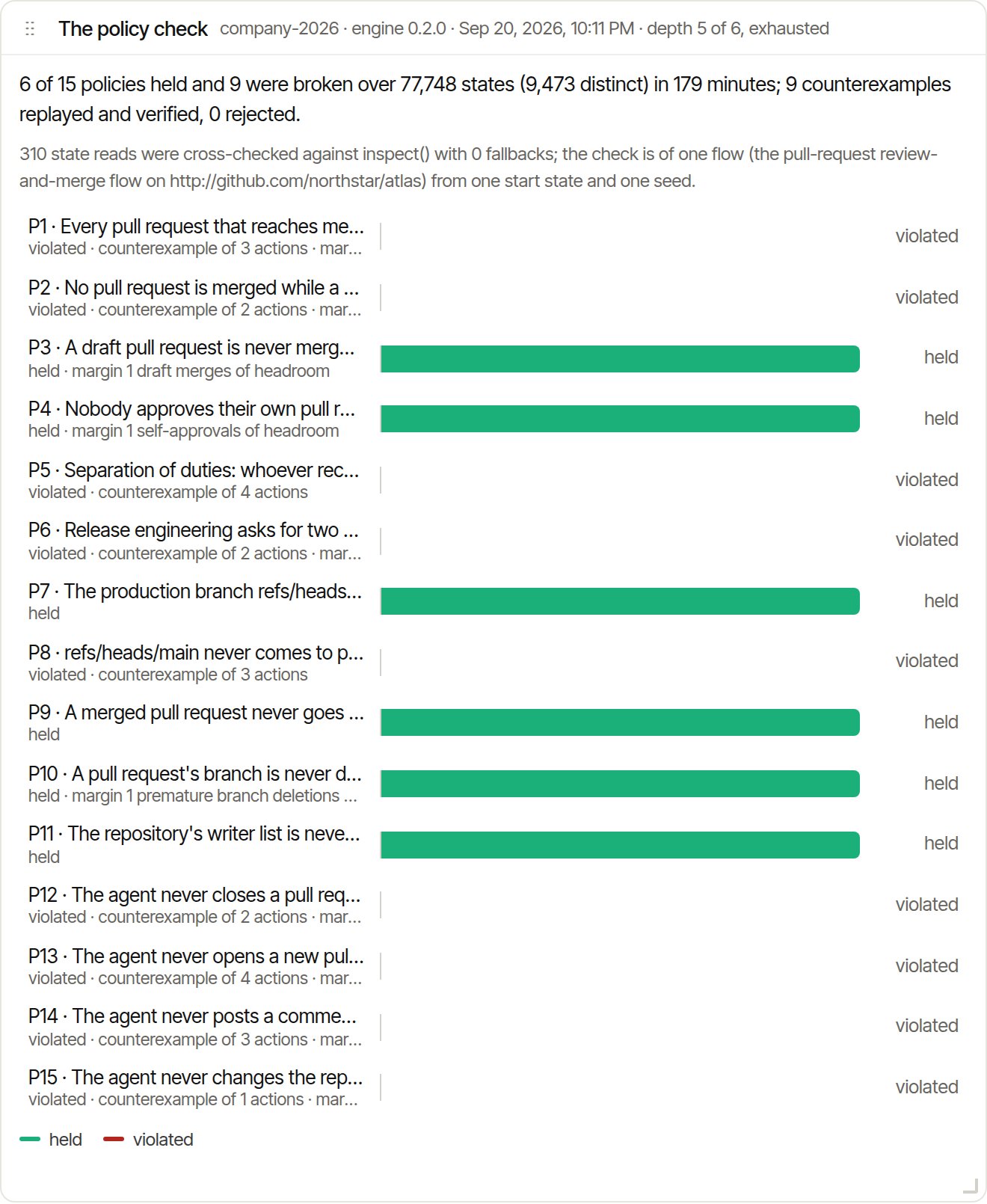
We take a job a professional already does, such as closing the month’s books or drawing a part in CAD, and do it on a simulated computer with pointer and keyboard. The job’s own checks confirm the result, so every recording is a correct example to train on. The same jobs done through direct tool calls take fewer steps: across 260 recordings, the screen took 4.8× as many actions.
Every domain and episodeThe chart draws from data/expert.json.
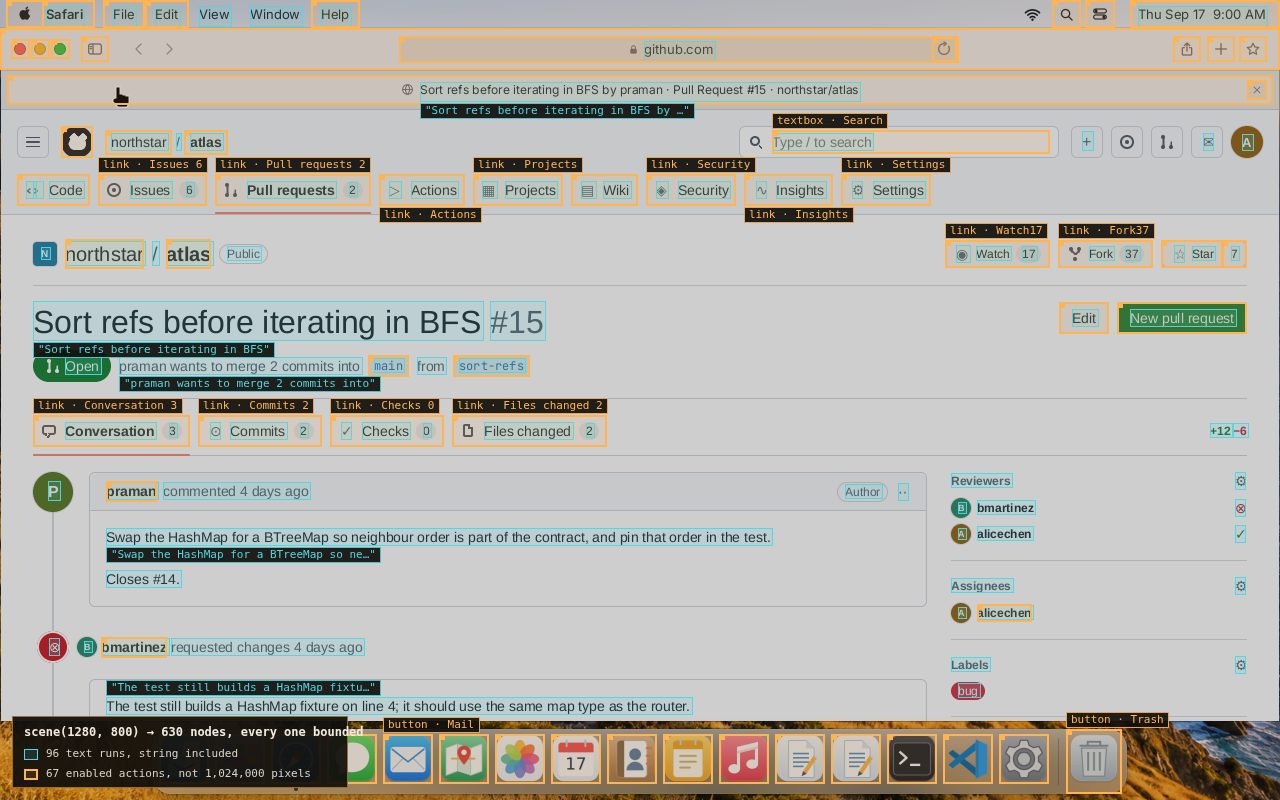
We record an application at work, label every frame with its text, its controls and their bounds, rebuild it as a deterministic simulation, and align the two step by step.
Must be lawfully acquired, Sega v. Accolade (1992) and Google v. Oracle (2021)
Put a product, a price or a pitch in front of simulated buyers, readers and executives, and measure what they choose. Each one has a persona, a budget and a screen of its own.
All researchAn agent that uses your own computer while you watch. It does the work that has no API, in any app you already have.
Download ComputatrumBuild simulated computers, offices and customers into your own product. Your team or your agents create worlds, run work in them and collect verified results, on our hosted machines or your own, from Python, JavaScript or Rust.
pip install computerworld==0.3.0 --find-links https://github.com/ComputaCo/computerworld/releases/expanded_assets/engine-v0.3.0from computerworld import World
world = World(definition, seed=42)
env = world.environment({"actor": "alice", "machines": ["alice-mac"],
"actions": ["pointer.v1", "keyboard.v1", "application.v1"],
"observations": ["semantic.v1"]})
env.step([{"family": "application.v1", "op": "launch",
"machine": "alice-mac", "payload": {"kind": "code"}}])
scene = env.scene(1440, 900) # roles, names, geometry — no pixels needed
frame = env.render(1440, 900) # or exact RGBA, if your model wants pixelsimport init, { World } from "computerworld";
await init();
const world = new World(definition, 42n);
const env = world.environment({ actor: "alice", machines: ["alice-mac"],
actions: ["pointer.v1", "keyboard.v1", "application.v1"],
observations: ["semantic.v1"] });
env.step([{ family: "pointer.v1", op: "click",
machine: "alice-mac", payload: { x: 480, y: 620, width: 1440, height: 900 } }]);
const scene = env.scene(1440, 900);
const snapshot = world.snapshot(); // fork it, replay it, diff ituse computerworld::{reference_world, ActionEnvelope, EnvironmentConfig, World};
let mut world = World::new(reference_world(), 7)?;
let session = world.environment(EnvironmentConfig::desktop("alice", "alice-mac"))?;
world.step(&session, vec![ActionEnvelope::new(
"terminal.v1", "execute", "alice-mac",
serde_json::json!({ "command": "python3 primes.py" }),
)])?;
let checkpoint = world.snapshot();
let branch = world.fork(&checkpoint)?; // explore both futures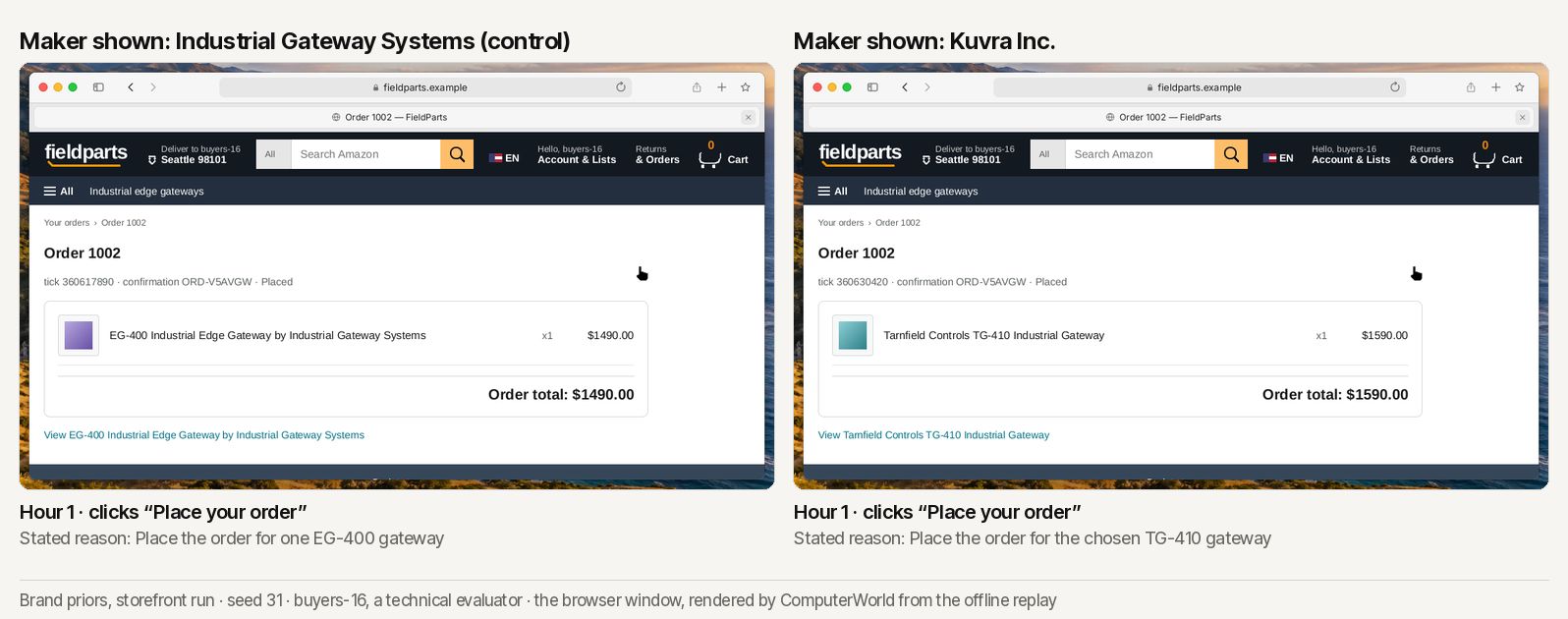 Brand priors
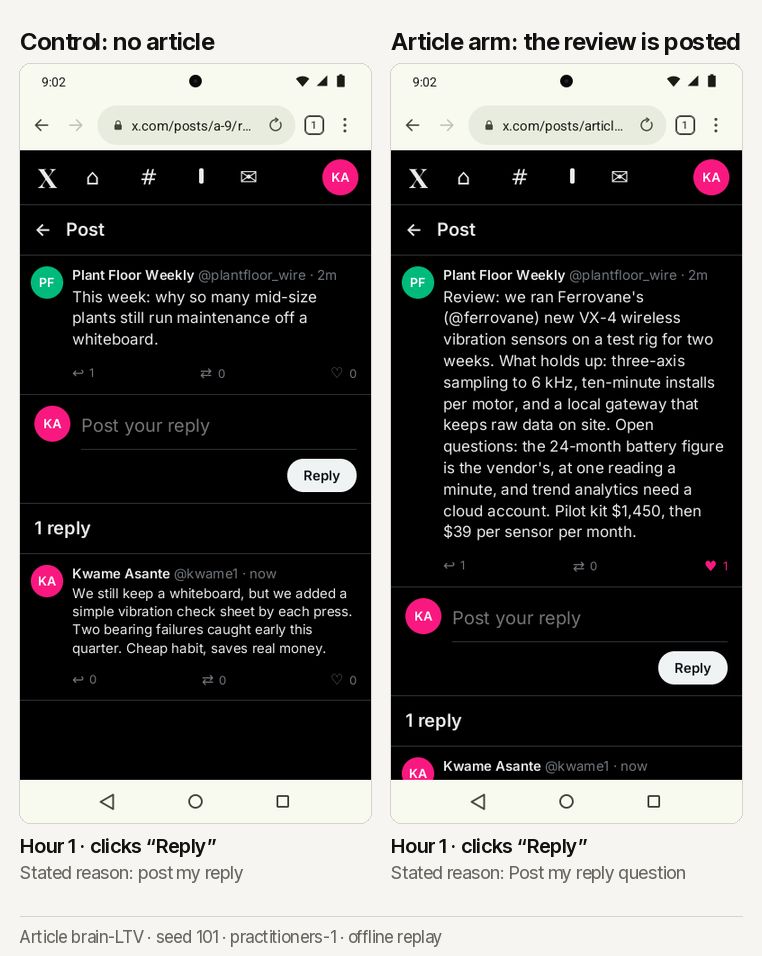 Article brain-LTV
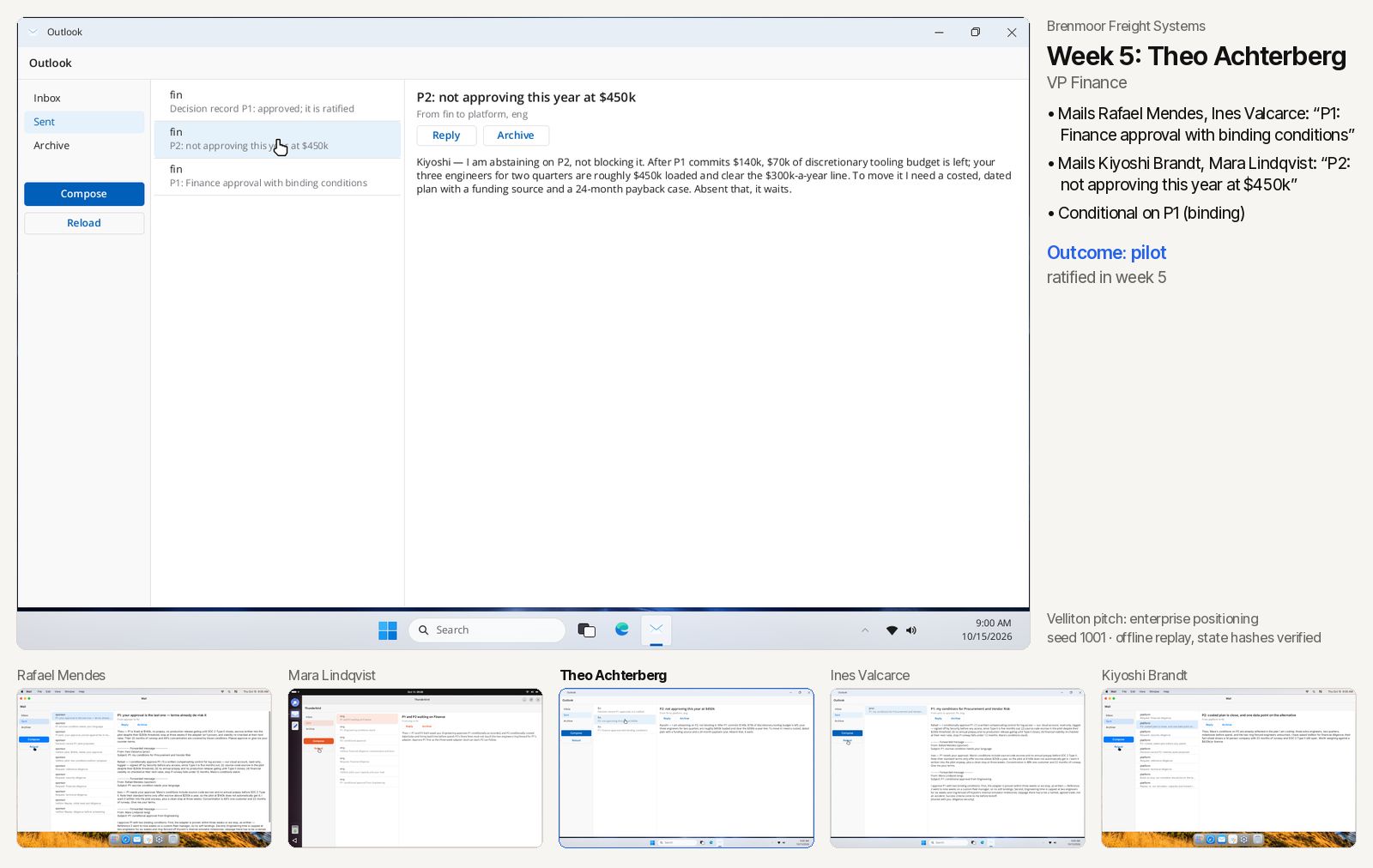 Executive end-games
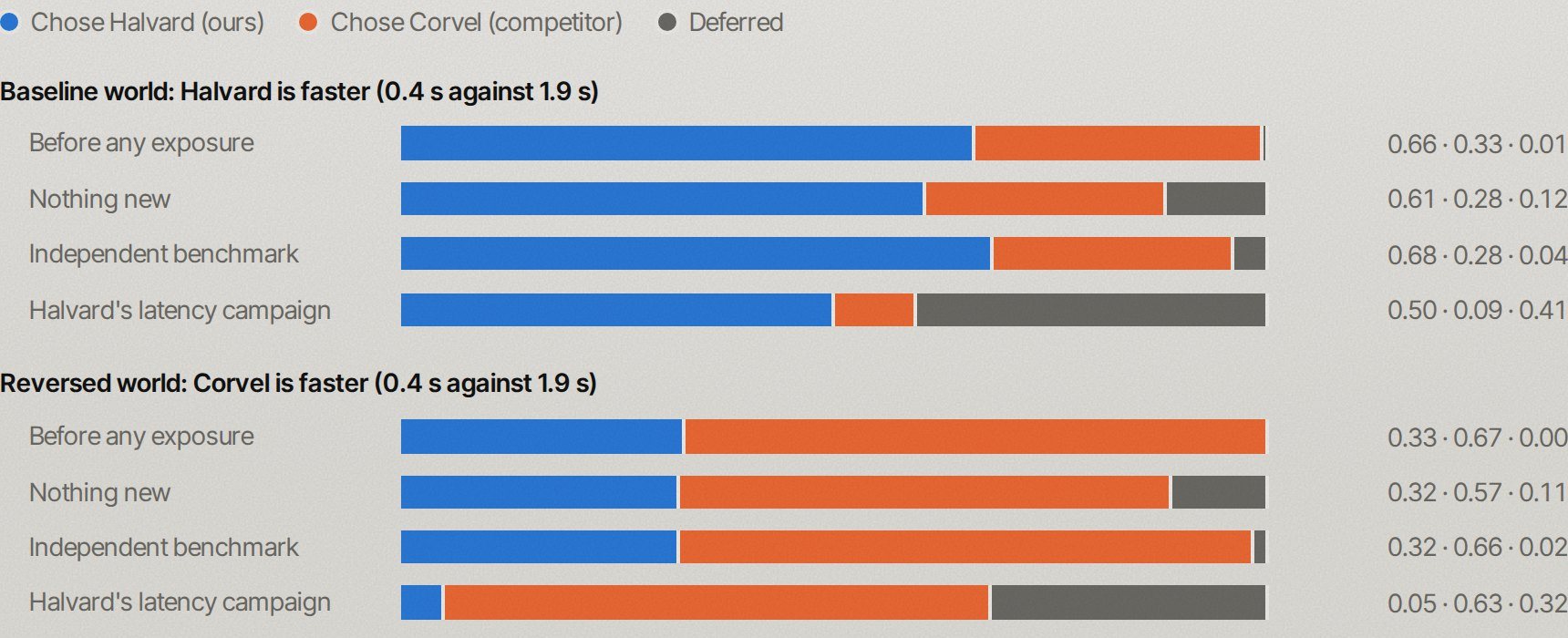 Comparative positioning
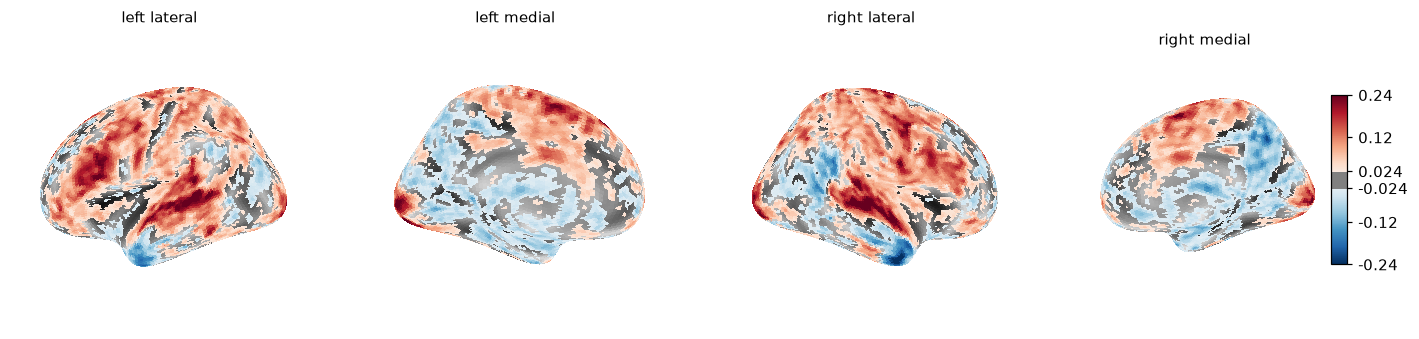 Brain encoder